

Indoor air & ducts
Ductwork Installation & Repair
Ductwork is the half of your HVAC system you never see and the cause of a remarkable share of comfort complaints: hot and cold rooms, weak airflow, dust, and high bills. Studies consistently find typical duct systems leak significantly — and no equipment upgrade fixes bad distribution. Good ductwork is designed (Manual D), sealed, insulated, and balanced — not just connected.
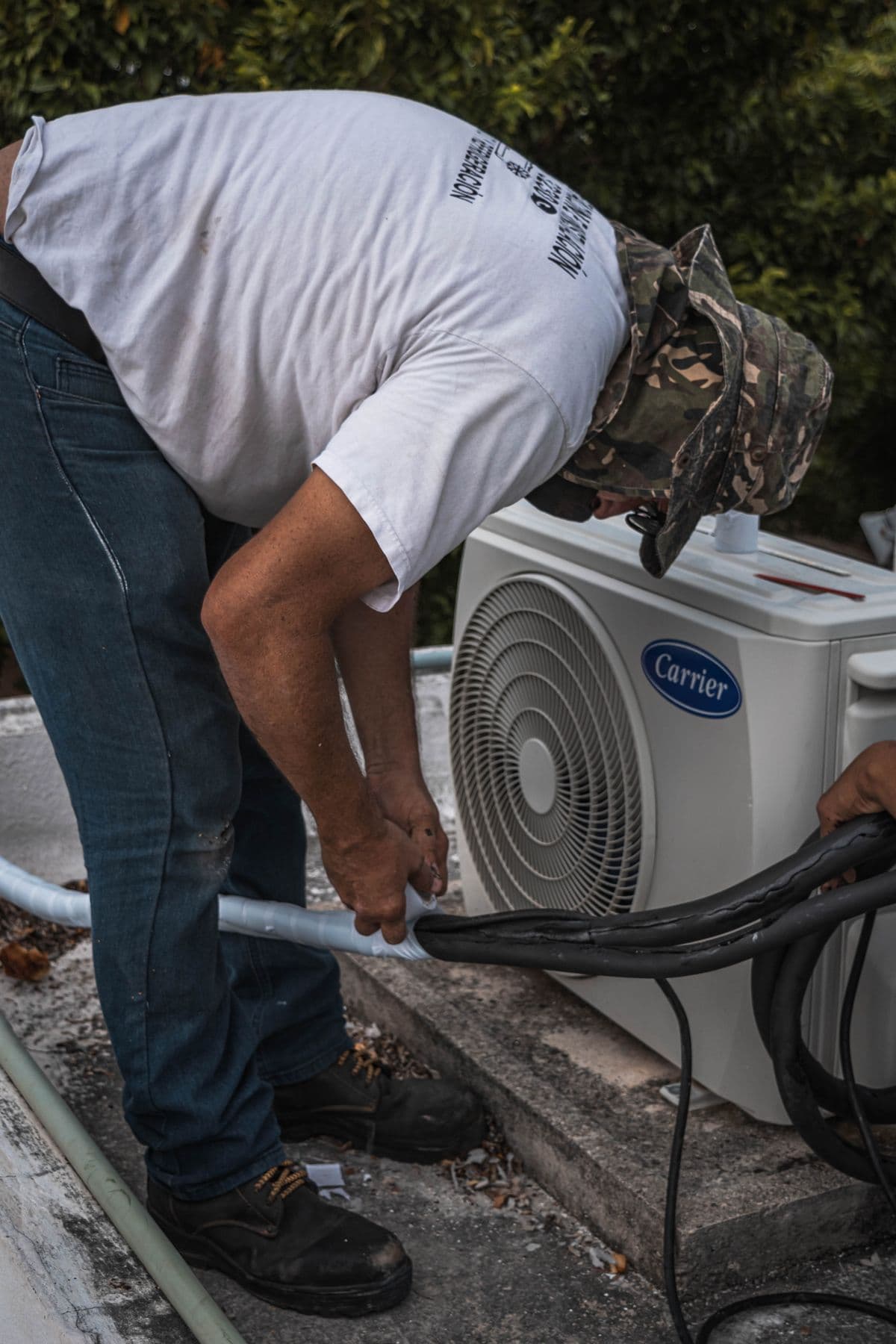
Ductwork Installation & Repair: at a glance
- What it is:
- Design, installation, sealing, and repair of ductwork — fixing leaks, crushed runs, poor layout, and airflow imbalances that starve rooms of heating or cooling.
- When you need it:
- When rooms heat or cool unevenly, ducts run through unconditioned spaces unsealed, or a new system install needs ductwork that matches it.
- The key decision:
- Leaky ducts can waste a large share of conditioned air into attics and crawlspaces. Sealing and insulating existing ducts often improves comfort more than upsizing equipment.
Key facts
| Typical timeline | 1–3 days for repairs and sealing; longer for full redesign |
|---|---|
| Key risk | Sealing without testing — a duct-blaster test proves the work actually worked |
| Relative scope | Medium — often the highest comfort-per-dollar upgrade |
| Best for | Uneven rooms, ducts in attics or crawlspaces, leaky or crushed runs |
Typical ranges for the material category — your home, climate, and installer quality move real results.
Do this first
- Map your symptoms: which rooms are hot/cold, weak vents, noisy airflow — the pattern reveals the duct problem.
- Ask for a static pressure test and room-by-room airflow readings, not just a visual estimate.
- If you're replacing equipment, have the ducts evaluated at the same time — new equipment on bad ducts disappoints.
- Beware quotes that only address equipment when your complaint is uneven temperatures — that's a duct problem.
What the crew does
- Measure airflow room by room and static pressure to find the real restrictions and leaks
- Design or redesign runs per Manual D — proper sizing, minimal sharp turns, correct takeoff placement
- Replace damaged, undersized, or collapsed duct sections
- Seal all joints and connections with mastic — not duct tape, which fails
- Insulate ducts in unconditioned spaces (attics, crawlspaces) to the appropriate R-value
- Balance the system with dampers so each room gets its designed airflow
Common questions
Almost always a distribution problem: undersized or leaky runs to those rooms, poor balancing, or ducts routed through extreme-temperature spaces. The equipment is rarely the cause when some rooms are fine and others aren't — that's the signature of a duct issue.
Usually one of the highest-ROI improvements in HVAC. Sealing leaks means the air you paid to heat or cool actually reaches the rooms — improving comfort and cutting waste at the same time. Mastic-sealed ducts also stay sealed; tape-sealed ones don't.
Properly installed, both work. Metal lasts longer and has lower friction; flex is cheaper and faster but kinks and sags easily when installed carelessly — and poorly installed flex is behind many airflow problems. Judge the installer more than the material.
Ductwork Installation & Repair by state
Local climate changes the right material and details. Pick your state for ductwork installation & repair guidance tuned to local conditions.