
What you can do yourself
Change or clean the air filter on schedule — every 1–3 months depending on filter type, pets, and dust. This single habit prevents more problems than everything else on the homeowner list combined: frozen coils, overheated furnaces, and choked airflow all start here.
Keep the outdoor unit clear: a few feet of clearance from plants and debris, gently hose off the condenser coils in spring (power off first), and keep gutters from dumping water onto it. Inside, make sure supply and return vents aren't blocked by furniture or rugs.
Test the system before the season: run the AC in spring before the first heat wave, run the heat in early fall before the first cold snap. Finding a problem in October beats finding it in January.
The professional spring visit (cooling)
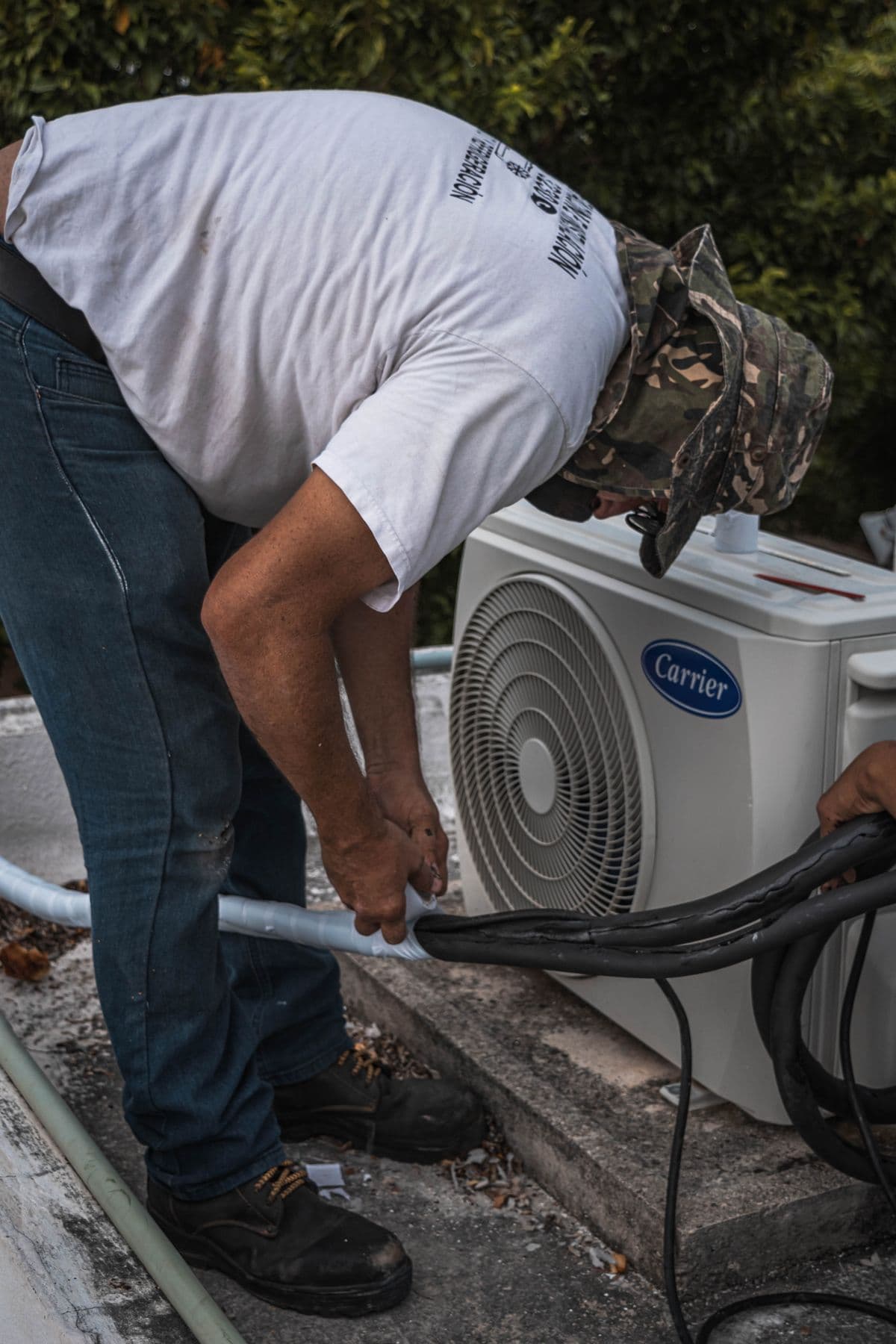
A real cooling tune-up: clean condenser and evaporator coils, check refrigerant charge, test capacitors and contactors, clear and flush the condensate drain, verify temperature split across the coil, tighten electrical connections, and calibrate the thermostat.
The condensate drain deserves emphasis — a clogged drain is the #1 cause of ceiling water damage from AC systems. An overflow float switch that shuts the system off when the drain backs up is cheap insurance; ask your tech about it.
The professional fall visit (heating)
The fall visit centers on safety: heat exchanger inspection, carbon monoxide testing, gas line and valve check, flue and venting inspection — then performance: burner and flame sensor cleaning, ignitor check, blower service, gas pressure and temperature-rise verification.
If you have a heat pump instead of a furnace, the fall visit mirrors the spring one with attention to the defrost cycle and auxiliary heat controls.
What maintenance actually buys you
Three things: safety verification (the CO and heat-exchanger checks), efficiency recovery (dirty coils and low charge silently cost you all season), and failure prediction — a tech measuring a weakening capacitor in October saves you a no-heat call in January.
It also protects most manufacturer warranties, which commonly require documented annual maintenance. Keep the paperwork — the checklist with actual readings, not just checkmarks.
Need a pro, not just advice?
Tell us what you need and your ZIP — we'll connect you with a local HVAC contractor.