
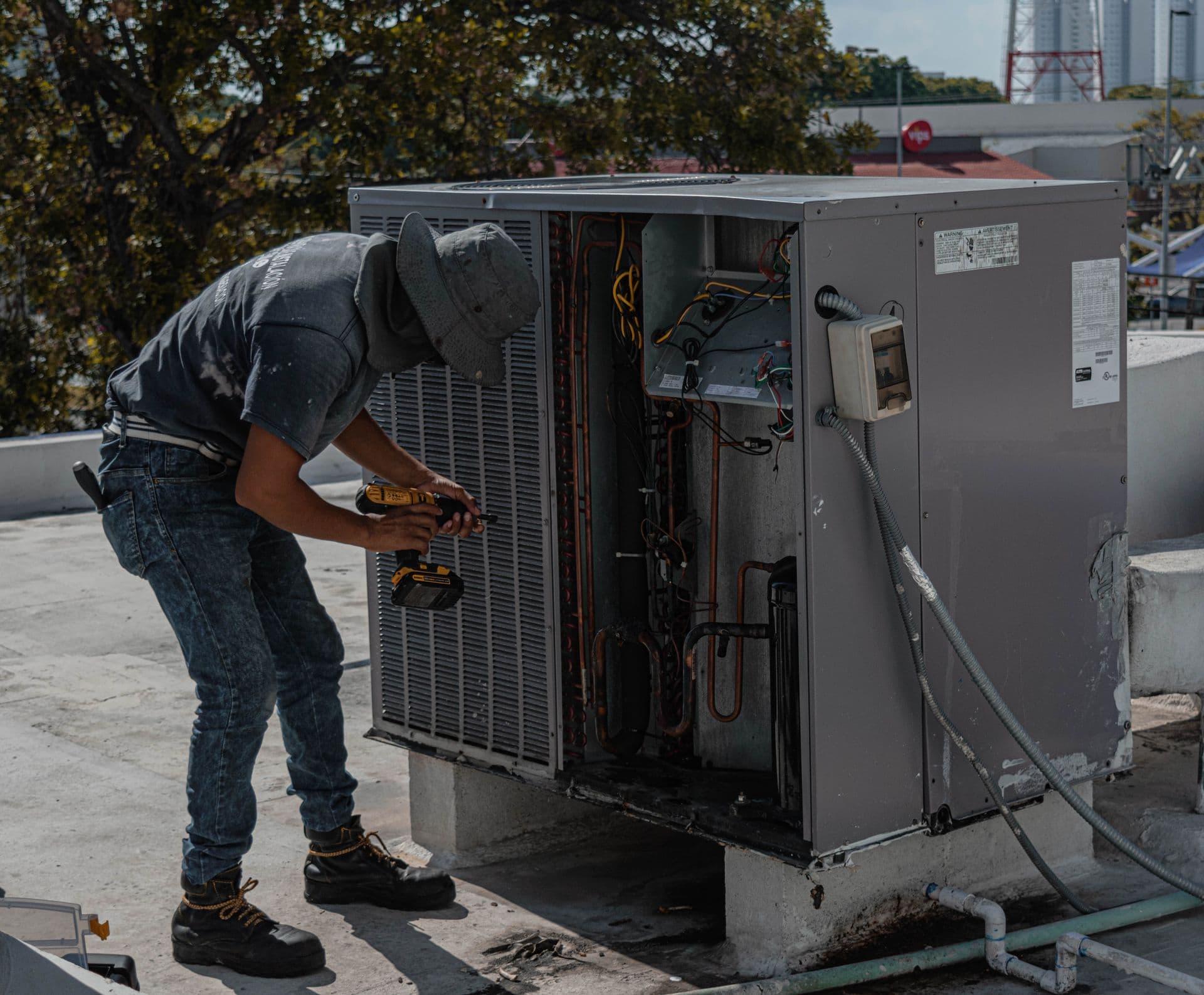
AC Repair in Texas
Most AC breakdowns are not mysterious — they are a short list of common failures (capacitors, contactors, refrigerant leaks, clogged drains, failed fan motors) plus a smaller set of expensive ones (compressor, coil). A good repair visit is mostly diagnosis: measurements first, parts second. The tech who measures superheat and subcooling before quoting a compressor is the tech you want.
Texas cooling loads are brutal — long summers in the triple digits across Dallas, Houston, and San Antonio keep air conditioners running for months, and Gulf humidity forces systems to dehumidify as well as cool. The flip side is winter: deep-freeze events burst pipes and kill heat pumps statewide, so cold-climate performance now matters in bids. Hail season also chews up condenser coils and outdoor units across North Texas.
The short answer for Texas
Diagnosis and repair for central air conditioners that won't cool, won't start, or run constantly without keeping up. In Texas, the deciding factor is extreme heat: Extreme heat is when marginal systems fail — capacitors and contactors die in heat waves, and a system that 'mostly kept up' finally can't. Summer repair demand peaks exactly when scheduling is hardest, so early-season tune-ups catch most of it.
How Texas’s climate affects this choice
Extreme heat: Extreme heat is when marginal systems fail — capacitors and contactors die in heat waves, and a system that 'mostly kept up' finally can't. Summer repair demand peaks exactly when scheduling is hardest, so early-season tune-ups catch most of it.
Humidity: In humid climates, a system that cools but doesn't dehumidify points to oversizing or airflow trouble — the repair visit should check runtime and indoor humidity, not just temperature.
What the job involves
- Check thermostat, breaker, and disconnect before touching the equipment
- Measure refrigerant pressures, superheat, and subcooling to distinguish a leak from a charge issue
- Test capacitors, contactors, and fan motors under load — the most common failure points
- Clear and flush the condensate drain, which causes a surprising share of shutdowns
- Inspect the evaporator and condenser coils for fouling that kills efficiency
- Explain what failed, what it costs relative to the system's age, and whether repair still makes sense
Do this first
- Check the thermostat (cool mode, set below room temp), the breaker, and the outdoor disconnect before calling.
- Replace a clogged filter — restricted airflow mimics several expensive failures.
- Note the symptoms precisely: won't start, runs but blows warm, short-cycles, ices up, makes noise. The pattern points to the cause.
- If you see ice on the refrigerant lines or coil, turn the system off and let it thaw — running it iced up damages the compressor.
Licensing note for Texas
Texas requires an Air Conditioning and Refrigeration Contractor license (TACL) through the Texas Department of Licensing and Regulation. Confirm the license is current before hiring.
Licensing rules change — verify current requirements with your state board before authorizing work.
AC Repair in Texas: FAQ
The honest math considers age, repair cost, and efficiency. A common rule of thumb: if the repair costs a large fraction of replacement and the system is past about two-thirds of its expected life, replacement deserves a real comparison. A good tech will show you both numbers without pressure.
Often low refrigerant from a leak, a badly fouled condenser coil, or restricted airflow from a clogged filter or failing blower. It can also be an undersized or aging system on the hottest days. Diagnosis starts with refrigerant measurements and airflow checks, not guesses.
Usually not for long. Grinding or screeching often means a failing motor or bearings; running it can turn a motor replacement into a compressor or coil problem. Shut it down and call — noise is one symptom where waiting reliably makes things worse.
Call or request service online and a local Texas contractor will schedule a free on-site estimate. Only an in-person inspection produces a real number — beware anyone who prices the job without measuring.
Texas requires an Air Conditioning and Refrigeration Contractor license (TACL) through the Texas Department of Licensing and Regulation. Confirm the license is current before hiring.